Greater Hulstria
From Particracy Wiki
| Greater Hulstria | |
|---|---|
| Motto: Vibirus Unitis Anthem: For the Monarchy | |
| | |
| Government | |
| Formal Name | Imperial Crownlands of Greater Hulstria |
| Government type | Constitutional Monarchy |
| Kaiser | Klaus Gustav IV |
| Governor-General | Frederick, Duke of Labsburg (FAP) |
| Staatsminister | Gereon von Thannhausenand (KHP) |
| Governing Coalition | New Concordance Coalition |
| Founded | 2193 |
| Demographics | |
| Official language | Hulstrian |
| Capital | Kien |
| Largest city | Kien |
| Area | 855,600 km² |
| Population - 2857 census | 458,005,479 |
| Currency | Hulstrian Crown (HC) |
| Gross Domestic Product | 10.1 Trillion |
| Sport | Curling |
| Animal | Phoenix |
| Internet TLD | .gh |
| Crownlands | |
| Hulstria, Hilgar, Mitrania, Kuratha, Budenlar | |
| National ID Number: 54 | |
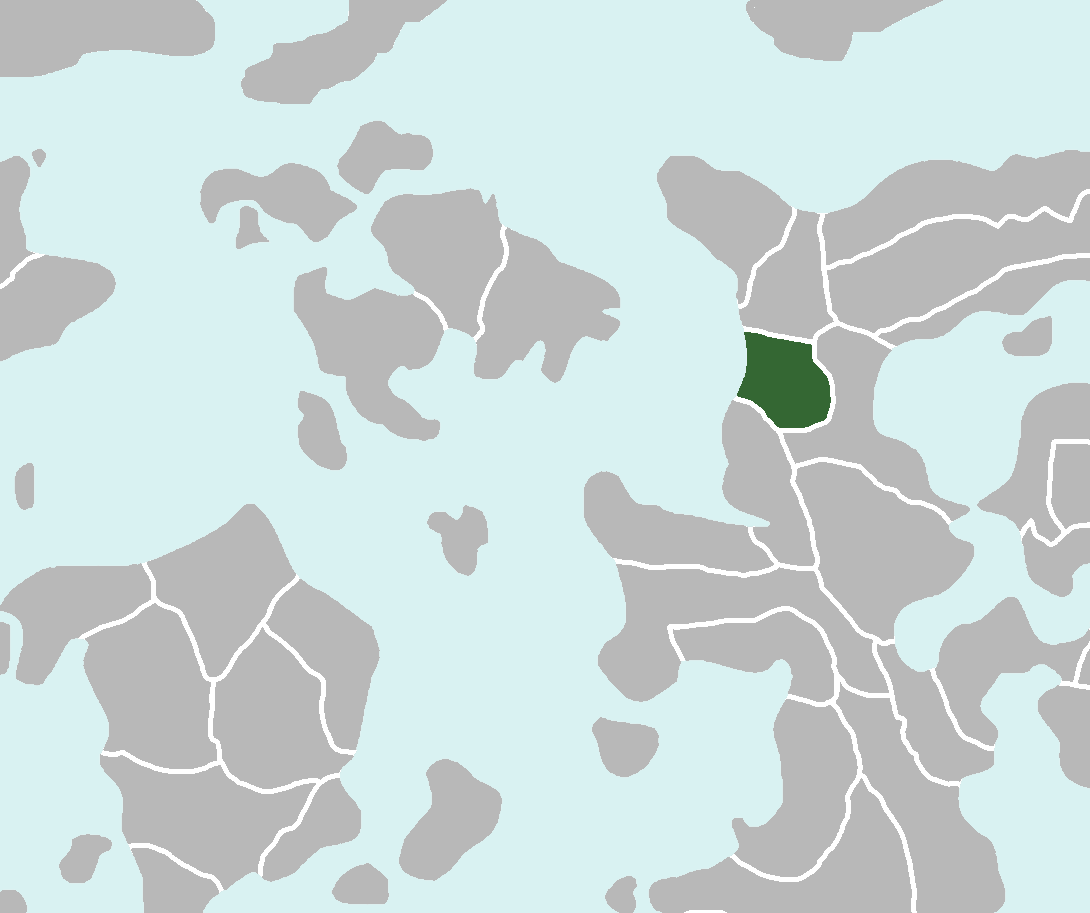
Greater Hulstria officially the Imperial Crownlands of Greater Hulstria (Hulstrian: Die Kaiserlichen Kronenländer Größeren Hulsterreichs) is a nation on the northwestern coast of Dovani. It is bordered to the north by Kazulia and to the south by Sekowo. To the East lies the "Eastern Territories", Greater Hulstria's colonial empire, and the vast Great North Dovani Plain. It is the 28th most populous nation on Terra and the 48th in order of area.
Greater Hulstria is a constitutional monarchy with the Emperor of Hulstria sitting as the hereditary Head of State, however Hulstria also has an elected Head of State called the Governor-General of Greater Hulstria; this system makes the Hulstrian government very unique and one of the few consitutional monarchies on Terra to have such a system. The Head of Government is called the "Staatsminister" and the national parliament is called the "Imperial Diet" comprising of currently 725 representatives.
[edit] History of Hulstria
Main Article: The History of Greater Hulstria
[edit] Early History
From roughly 800-1493 the lands which currently make up Hulstria were part of the Empire of Gao-Soto, a Gao-Showa nation of feudal fiefdoms and nomad homelands under the titular rule of the Clan Meiji Emperor in the capital of Akihito. Little evidence of this period remains, as most permanent settlements were destroyed by colonists in later years along with written records which were stored for the most part in Shinto Temples.
[edit] The Colonial Period
Modern Hulstria started in 1493 when Dovani was discovered by Christopher Dove and claimed for the Holy Luthori Empire. The Luthori lands on the continent were divided into several colonies, comprising what is today Greater Hulstria and Kazulia. The colonies quickly grew in size as people from across the world sought a new life in the new world with promises of an easy life and an escape from the past. Besides Luthori, the Hulstrian colonies saw a massive influx of Dundorfian settlers who would heavily and directly impact Hulstrian culture and language.
[edit] The Hulstrian Rebellion
In 1639, the Luthori Colonies on Dovani lead by Hulstria formally revolted against colonial rule, and began calls for independence. As one of the reasons, the colonies very much resented the increasing removal of the seats of colonial governments to Liore, which was on the other side of the world. The first five years of the Revolt are known as the "Bloodless Period" because they saw no response from the Holy Luthori Emperor, his military nor the Luthori parliament; the rebels were virtually ignored in this time frame that actually gave the rebellion time to plot their revolution, free of Luthori involvement. During this time the first Hulstrian Diet met with future Emperor Franz I and appointed him as Hulstria's delegate to the "Independence Congress", a large council composed of representatives from across the colonies on Dovani taking part in this rebellion. The Congress eventually met in Kien, the capital of Hulstria, where the Declaration of Sovereignty was drafted, the official document declaring independence, and after nearly seven months accepted by the colonies. Franz following the signing of the Declaration, was appointed Aide-de-Camp to Commander-in-Chief of the Hulstrian Army, Field Marshal Heindrich von Marchau. Marchau did almost nothing in his tenure as head of the Hulstrian Army, and in 1644 shortly before formal fighting broke out he was releaved of command. Franz was nominated and shortly thereafter appointed to replace him, jumping him from Brigadier General to Field Marshal.
Finally in late 1644 Luthori launched a large surprise military attack to supress the revolt and troops landed on Hulstrian soil, rapidly overunning most of the coastal regions including what is now known as Kuratha. The Battle of Volkermarkt was the official first battle between Hulstrian and Luthori armies in the Great Rebellion; both sides saw large casualties however the Luthori ground forces during the end of the battle flanked the Hulstrian troops and effectively won the battle. This defeat was a major de-moralizer to the Hulstrians however it also served a lesson to the rebellion to learn from the military mistakes from that battle; this would become true in the Battle of Konstanz shorty after as Hulstria defeated Luthori and took back the town from Luthori forces. The remaining years of the war were a back and forth struggle between the Holy Imperial Army of Luthori and the Hulstrian rebels; during the final courses of the way Luthori looked to seize victory yet such hopes were dimished when Field Marshal Franz undertook a massive "hit and run" campaign on Luthori supply lines, limiting the Holy Imperial Army capability to properly fight on Hulstrian ground.
In a bold effort to silence the rebellion once and for all, a massive flet of reinforcements were sent to Hulstria with the task of toppling Kien, the main operation command of the rebellion force in Hulstria. The Holy Imperial Army forged through what today is Budenlar and western Hulstria to finally reach the outskirts of Kien with orders to burn it to the ground upon, creating a deadly blow to the colonial resistance. Luthori and Hulstrian forces, lead by General John Codrington and Field Marshall Franz respectively, met on a cold December 13th, 1646, in what is considered by historians the largest and longest battle of the war, the Battle of Kiennese Pass, took place just outside of the Hulstrian capital city; Luthori at first had outnumbered the Hulstrians, it was only on a ratio of 3 to 2. The Fortress Kien, the main defensive structure out of the capital, faced constant attacks from Luthori forces as the Holy Imperial Army knew if this Fortress were to go down, Kien was open for their taking; the Hulstrians however successfuly defended the Fortress but faced large casualties as a result. Codrington, a noted expert in artillery weaponry, used the weapon effectivley in the battle, though some military strategists believe he used artillery too much giving way for Hulstria and Franz for their own surprise attack.Field Marshall Franz rallied a calvary unit, who following the battle would forever be known as the Hulstrian Lancers. This elite group of men had all been trained at the Luthori Riding School in Kien, and while only comprised of 500 men, they are recorded to have accounted for nearly 3,000 of the Luthori dead, or one tenth of the entire Luthori force at that battle. This ace up Franz's sleeve caused a victory for the Hulstrian forces and this following this victory at the Kiennese Pass, Franz began pushing the Luthori out of Hulstria while in the process taking back most of the country. The Hulstrian Rebellion in 1649 the Holy Luthori Emperor began to worry that a drawn out war might cause other Luthori colonies like Kazulia to revolt and therefore granted Hulstrian independence; by the end of that year all Luthori forces were removed from Hulstria and the country began to set up it's own government. While despite the large war between Hulstria and Luthori in this time, today in the modern era the two countries acknowledge one another as being very close allies; two monarchies as well today are ruled by the same royal dynasty, known as the Rothingren-Traugotts.
[edit] Rise of Monarchy
Following the Peace of Kien, the treaty between Luthori and Hulstria that ended the war, the 2nd congregation of the Hulstrian Diet met in Kien to discuss the establishment of a new government in their newly independent government. Two camps quickly formed themselves Diet, those who pushed for an establishment of a republic with an elected head of state and those who wished to see a constitutional monarchy, a Hulstrian Monarchy established. In the end after large amounts of debate, the Monarchists gained the needed support to push their government through with popular support and established the Hulstrian Empire. However what the monarchists forgot to do was to designate an Emperor as the empire remained without a ruling Monarch rendering the country without an effective Head of State. The newly created Imperial Diet, replacing the "Hulstrian", in Kien soon therefore offered the crown to, what many called him, Hulstria's greatest military general Franz Rothingren. He accepted and was crowned Kaiser of Hulstria on August 3rd, 1650; upon also becoming Emperor, he also started and was the first to head the House of Rothingren, the ruling royal family in Hulstria that would go onto to rule for hundreds upon hundreds of years.
The first years of the new Hulstrian Monarchy were that of skepticism and great curiosity; the monarchists in the new nation of Greater Hulstria, made up primarily Hulstrians, were increasingly hopeful for the emergence of a strong constitutional monarchy in Hulstria. Kaiser Franz I knew that despite overt popular support, the Hulstrian Monarchy would not either last or grow to heights the monarchists hoped if there was not a strong economy and a strong society; Emperor Franz pushed through the Imperial Diet vast new initiatives to expand the markets in Greater Hulstria and to open up trade to the Holy Luthori Empire to begin new relations, healing the wounds left behind the The Hulstrian Rebellion. Kaiser Franz I also made grounds in establishing the first territories for the young Hulstrian Empire, with Hulstria taking a sizeable portion of land west of the Sea of Corina. Great architectural achievements such as the Fliederbrunn Palace, the Castle Hulstria, the Hulstrian National Cathedral, and the Kolburg Palace were done within the reign of Franz I; many consider Franz's reign, which lasted for 26 years, as a launching point for the rise of Greater Hulstria on the world stage and the expansion of Lutheranism on Dovani. His tenure offered stability and hope after a bloody revolution. The majority of the Imperial Writ & Regulation to the Hulstrian throne was additionally written during Franz's time; while it has changed throughout the years, Emperors today still follow what was handed down in the late 1600s. The military and political genious of Franz are still appreciated and studied by political scientists even in modern times, over 1500 years later his death.
On November 2nd, 1676 Emperor Franz I died at the age of 76 paving the way for the first ever formal succession in Hulstrian Monarch history; Rudolph I became the new Emperor of Hulstria following his father's death. Unlike Franz I, Rudolph was not an energetic and lead a very conventional lifestyle. Even though he was not as a striking figure as his father, he did provide leadership in continuing many of Franz's initiatives, and focused on building a strong colonial empire by improving conditions in Hulstria's territories; what Rudolph did not have was as long as a tenure. After six years of assuming the throne as the Emperor of Hulstria Rudolph died in 1681; his son Maxmilian I, who was more eccentric and lively, inherited the throne. Maxmilian had great visions for the new Hulstrian monarchy and empire, pushing for mass new city construction and territory maintience; under his reign saw a massive influx of the skilled shipping trade in Greater Hulstria, within 10 years into his tenure the Hulstrian shipping industry became the dominant force in the world, and such dominance even continues on today. Emperor Maxmilian I in 1694 was able to successfully fend off nomadic invading forces in the Hulstrian territories, which led the rise of greater nationalism within Hulstria; the Imperial Army easily crushed the nomad horde and signaled Hulstrian supremacy within the area. Kien, which served as the operations center for Hulstrian revolutionaries during the Great Rebellion, became Hulstria's main cultural and political center additionally under Maxmilian I. Several royal families arose after the turn of the century in 1700 such as the House of Strauss, the House of Labsburg, and the House of Traugott made up the bulk of the royalist scene in Hulstria next to the Rothingrens; Maxmilian made consistant efforts to keep good grounds with these families and over time would get them to become stanch allies of the Rothingrens by involving them with monarchist affairs, especially with the House of Traugott. Ranked as one of the best Emperor's Hulstria has had, Maxmilian reign was marked by great economic progress, military supremacy, and the expansion of royalism across the country that many say kept the Hulstrian Empire on the world stage; in 1732, after over a half of century as Emperor of Hulstria, Maxmilian I died. Maxmilian I was not able to produce a male heir and only had one child, Henrietta, with his wife. Thus upon the death of Emperor Maxmilian, Henrietta became the new sovereign of Hulstria as the first and last Empress of Hulstria as Henrietta I.
Empress Henrietta I upon succeeding her father brought both new hopes and new worries; monarchists were split on this issue in Hulstria, some believed that the monarch should not be gender preference and argued for a diversified while some some on the other hand though the Hulstrian Monarchy and the line of succession should be male preference or come under "salic law", prohibiting women from obtaining inheritance. The monarchists on the latter were also worried that Henrietta I was not married and did not yet produce a heir to the throne, threatening to end the Rothingren line. Henrietta was rumored to be romantically involved with Balthazar, the head of the House of Traugott yet marriage was not applied to the both of them; the two eventually did marry in 1735 and united the Houses of Rothingren and Traugott, creating the House of Rothingren-Traugott. The marriage and the subsequent child they produced ensured the continuation of the Hulstrian Monarchy and imperial succession. With both Balthazar and Henrietta being the respective heads of their royal families upon their marriage became the two ruling monarchs in Hulstria in a system that would be applied very much later on again in Hulstrian history known as a "Dual Monarchy" system; the two reigned as Emperor and Empress with both retaining powers and authority. The issue of succession and salic law were not overtly addressed during their reign, ignoring some of the monarchists voicing opposition to this, though but they did have a male heir including several other children that increased the growth of the new House of Rothingren-Traugott; later on in their son's reign as Emperor did the issue of the line of succession and gender preference come into fruition. In 1750 Balthazar suddenly died from a deadly cancer putting an end to the Dual Monarchy and six years later Henrietta died in 1756, still reeling from his death. Their son Rainer, who would become the youngest Monarch in Hulstrian history to assume the throne at the age of 20, became the new Emperor of Hulstria as Rainer I. His succession marked him as the first Emperor to be from the newly formed Rothingren-Traugotts.
[edit] Beginning of the Rothingren-Traugotts
When Emperor Rainer I assumed the Hulstrian throne, he became the first Monarch under the House of the Rothingren-Traugott, the now most powerful family in the country and throughout the centuries would eventually become one of the powerful families in the world. Becoming the Kaiser at such a young age, just at 20 years old, came with benefits and disadvantages; like his mother, he was faced with both criticism and open arms by Hulstrian monarchists. Some said that his age would provide a youthful and active Monarch while others believed his age would provide inexperience and "a young mind" in governing the Empire. Rainer I addressed his opponents on this matter in a statement known as the "Diet Rundown" in the Imperial Diet on March 22nd, 1756, where he called for an end to monarchist divide and instead for monarchist unity within the Hulstria; in the statement Rainer I said that all monarchists within the country should show "unwavering" support for the Monarch and not subject themselves to erroneous debate. Showing a "lack of unity" shows not only the known world but the entire citizenry that the "country is divided and unstable" said the Emperor; instead of bickering Rainer I declared, "all members of parliament and citizens of the country, should work in the progress of the well being of both Empire and people". The Emperor also publically called out opponents as well, with recorded witnesses saying he actually had a paper with their names on it, hence the "Rundown", and challenged voice their discretionaries in public, in front of him; no one did. This speech was seen as a major turning point for royalism in Hulstria and for Rainer's tenure; monarchists began to end their bickering and objections on irrelevant topics concerning the sovereign and a greater sense of nationalism swept across the Empire once word was spread. Rainer's image also improved with many people noting him as being confident and a gifted orator, a trait that would be handed down to the Rothingren-Traugotts from there on.
Under Rainer I the colonial empire of Hulstria expanded along the northern coastline of the Sea of Corina and the acquisition of the island situtated in the middle of Corina which was named Rainer Island in 1758, in honor of the Emperor. A large expansion of the Imperial Army and the creation of the Imperial Guard, the Emperor's personal guard, marked progress as well on the military front. The rise of conservatism and traditionalism marked the political atmosphere in Hulstria. The arts, which Rainer was a fan of, grew and experienced an explosion of embracement by Hulstrians in the 1760s; painting in particular became the new social fad among the population. Various famous paintings from this era, including that of the "Hulstrian Mountainside" by by Hanz Zatzka, defined an entire decade and fine portion of the reign of Kaiser Rainer. The issue of imperial succession and salic law was addressed by Rainer later on in his tenure; in 1773 Rainer issued a new Hulstrian Writ on succession and formally adopted salic law to determine succession for the Hulstrian throne; he also issued that only Lutherans or Protestants could be eligble for the line of succession, excluding Catholics and other religions. As for salic law, this meant that women could not be in the line of succession to the Hulstrian throne though could still be given titles and styles since they are Rothingren-Traugott; this prevented another Henrietta to become the Sovereign. In 1777 Emperor Rainer I suddenly died from a then uncurable virus; medicine back then was unable to recover the Emperor, which he would have survived if he was in modern times. His death put the country in massive shock and the funeral that come after his passing was very large. Rainer's son, Karl, took the throne and was cornoated as the new Emperor of Hulstria. The Rothingren-Traugotts would see successful monarchs with Karl I (1777-1814), Franz II (1814-1835), and Sebastian I (1835-1848) throughout the decades to come following Rainer.
[edit] Era of Glory
After the death of Emperor Sebastian I, his son Klaus Gustav was coronated as the Emperor of Hulstria; the reign of Klaus Gustav is considered to be a major turning point for Hulstria and the Rothingren-Traugotts. In what has been called the "Era of Glory" was a period of massive cultural, political, royalist, and colonial growth in Hulstria; advancements in the arts, the evolution of political parties, new imperial nationalism, and the rise of infrastructure marked the successes of Emeror Klaus Gustav I's illustrious tenure. During the 19th century, Hulstria became a cradle of numerous scientists with international reputation; Hulstrian scientists during this time were credited to the creation of the atomic theory, the study of shock waves, and much more. Kaiser Klaus Gustav was known to be a large patron of several scientific organizations during this time and encouraged science throughout his reign; not only was science increasing in promience in Hulstria, so was the study of medicine. The renowned "Kien School of Medicine", which still operates today, was created in the mid 1800s; contributions to the discovery of the "Asperger syndrome", the studies of bacteriology and immunology, and abdominal surgery are credited to Hulstrian scientists/physicians.
The Era of Glory was also a time of stanch royalist activity and nationalism; the Monarch under Klaus Gustav I was strong and such a status was mirrored with the citizenry. The nationalism provided a new gateway to economic prosperity within Hulstria and the expansion of the colonial empire; new territory surrounding the Sea of Corina were put under Hulstrian rule and the Hulstrian Empire took their first colonial steps into the northern Caltropic Highlands on Dovani. Klaus Gustav I as well took the first steps in creating a functioning colonial government in the "Eastern Territories", a term first used in the late 1860s that still exists today, by establishing a "Colonial Secretary" to supervise and govern the territories on behalf of the Monarchy; the Colonial Secretaries were ususally a trusted associate of the Sovereign or a noble and were only appointed by the Monarch. Hulstria politically was as noted very royalist during this time but there was not an absence of republican activity; the rise of communist theory in the early 1850s attributed to the changes in political beliefs, especially among the minority Gao-Showa population immigrating from Sekowo, within Hilgar. Tory parties within the Diet in Hulstria were able to supress these sympathies however and were successful in keeping the legislature royalist; the communists were also rejected by the vast majority of Hulstrians and were kept out of the mainstream for some time. Following the attempted assassination of Klaus Gustav I, which failed terribly, not only did more people unite around the Monarch but condemned the republicans and communists, leading to their political outcast status.
The increasing interest of music also marked the Era of Glory; Hulstrian citizens, in particular in Kien, to a vast kindle to musical art. Thanks to the status of Hulstria as a colonial power and cultural environment provided an advancement various forms of art, most notably in this instance music; composers were also drawn to Hulstria due to the patronage of the Rothingren-Traugotts. Kien was one of the first cities to embrace music and was the birthplace of many famous composers; Josef Mozart was one of these famous composers and is considered the founder of Hulstrian classical music. His vast influence on composers in later generations has made his scores standard part of the training of classical musicians around the world. Klaus Gustav I even invited Josef Mozart to perform "Symphony 40", one of his most renowned works, at the Fliederbrunn Palace. Peter Schubert, Edward Strauss, and Arnold Weburn are also noted as being the finest composers of their day; waltzes, polkas, quadrilles, and other forms of dance were widely popular in Hulstrian society during the late 19th century. Today, Kien is regarded as being one of the leading cities and the Dovani capital of classical music.
Klaus Gustavs I's reign (68 years) was one of the longest tenures any Emperor has had; Klaus Gustav's time was marked by great advances in science, art, music, and Hulstrian power. Many historians believe, disregarding the failed assassination attempt and the birth of communism, that this period of Hulstrian history to be one of the most peaceful and prosperous. In 1916 Klaus Gustav died at Fliederbrunn and his son, Crown Prince Klemens, was soon coronated as the new Emperor of Hulstria as Klemens I. Klaus Gustav's son was well into his early 70s and was already expected to have a short reign; despite his age and a possibility of a short rule, Klemens did not abdicate to his son, Crown Prince Rainer. Klemens I did however give many royal duties to Rainer and did increase the amount of patronages by the House of Rothingren-Traugott. While Klemen's rule was very short, the Era of Glory continued on, mainly in the form of advances in the military field. After the mass production and invention of the tank by Luthori in 1918, Hulstria was at first slow at constructing these new military weapons, however Hulstria introduced and championed the military strategy of the "blitzkrieg", a tactic of using a mass concentration of tanks supported by other military means such as artillery and air power to break through enemy defenses. In 1920 Klemens I died, only serving for four years in one of the shortest reigns of Hulstrian history; his son, Rainer, took on the name of "Rainer II" after Rainer I, the first Rothingren-Traugott Emperor.
Rainer II continued many of the policies of his father and the Era of Glory continued to go on during his own reign. Rainer within a few years of his coronation led an effort to centralize the government of Hulstria, pushing for greater centralization in both domestic Hulstria and in the colonies. The Emperor eventually was able to succeed in getting these reforms and used them to push for new initiatives within the nation; he got the Rothingren-Traugotts to patron new educational and medical institutions in his first cause. Rainer II sought to produce literate citizenry and created scholarships on behalf of poorer Hulstrians. In the early 1930s, centralization helped improve the production of educated doctors and improved facilities were created as well; some cities in Hulstria were facing inefficient budgets and the Monarch sought to end that, thus the new improvements. Kien especially was a perfect example of the new medical infrastructure; the Kien Imperial Hospital, which operates today, was constructed in the mid 1930s and acted as the preferred hospital for members of the imperial family. The Hulstrian Academy of Medical Research, the Kiennese School of Medicine, and the Rainer’s new medical patronages and the Imperial Diet’s pro-medical legislation, gave way to important Hulstrian doctors like Franz von Eiselsberg, one of the founders neurosurgery, and Wilhelm Klein, a chief researcher into cerebral palsy, to perform very well. The economy as a result was going good and on that front, citizens enjoyed a sustainable lifestyle.
Rainer in 1941 died and the Hulstrian throne was passed on to his son, Crown Prince Franz, who took the name of Franz III and reigned for 26 years; Franz III is believed to be one of the last stable monarchies of the “Era of Glory” due to the fact his next three successors (his sons Maximilian II, Dominik I, and once again Maximilian II) would contest for the Hulstrian throne due to their dueling claims. Eventually Maximilian II was found to be the legitimate heir to the throne yet did not for very long and disgusted the way his succession went, he abdicated June 1968 after reigning for 3 months to his son, Crown Prince Rudolph who would become Emperor Rudolph II upon his coronation. The Rothingren-Traugotts and Hulstria took awhile to get over the events from the succession conflicts between Maximilian and Dominik though eventually recovered. Rudolph II helped heal those wounds in his peaceful reign; Rudolph was noted to have liked to run his Empire by the stroke of the pen than being out in public.
[edit] Post Dark Period
In 2193 Hulstria was rebuilt after 100 years of anarchy and chaos called the "Great Dark Period". The new Republic of Gishoto emerged with Gishoto being a compromise between the Hulstrians and Gao-Showa living within the newly stable country. This new government however would only last for a very short time as it was eventually renamed as the Holy Gishoto Empire, abolishing the title of "President" and re-establishing the Lutheran monarchy that ended a century before; this effort was lead by the Imperial Hulstrian Party and various other monarchist parties in the legislature. The movement was supported by the already pro-royalist Hulstrian population and was widely praised by international monarchist observers; Klaus Gustav III of the House of Rothingren-Traugott was crowned as the new Lutheran Emperor of Gishoto.
The installation of the Lutheran monarchy was made to much protest of the Shinto Gao-Showa and the various communist groups within the Empire; their failure to prevent the Lutheran monarchy being restored crushed their opposition and caused them to run to the underground, become outcasts once again in the mainstream of the new society. This was just for the time being however. Some Gao-Showans even refused to take part in the new government and refused to recognize Klaus Gustav III as the Head of State; this lead to verbal conflict between the cultures and the clash of preffered political ideology by the two cultures for centuries. Despite this, nationalism still swept across Gishoto and the economy began to finally prosper yet again, healing the wounds of the Great Dark Period; the first years of Klaus Gustav III were that of great prosperity and a re-emergence of a styled culture that was once just pure fantasy during the Great Dark Period. The emergence of the Holy Gishoto Empire also saw the re-birth of political parties within the country.
[edit] Gishoto
This situation remained for many years in the Holy Gishoto Empire until the 2240s when many of the old monarchist parties and traditional institutions of the state started to crumble. The collapse of various monarchist parties slimmed down dramatically supporters for the Monarch in the legislature and the communist parties who were once forced underground took advantage of such vancancies, systematically took control of the legislature who were supported by a large majority of the Gao-Showan people; the Imperial Hulstrian Party attempted to prevent a communist takeover but were overwhelmed as were most Hulstrians. Communist and radicalist republican parties also began to turn violent and attacked government institutions bringing disorder to parts of the nation; the frenzy eventually culminated in the revolution of 2245-48 lead by the militant Communist Party of Gishoto. The Monarchy remained intact during the majority of the upheaval and many times called for an end to violence. Such calls were ignored by the communists.
The revolution came to a bloody end in 2248 where Kaiser Klaus Gustav III was assassinated in Kien when a communist rebel launched an RPG at the Kaiser's automobile, killing him instantly; his death led the paralyzation of the Lutheran Monarchy and a mandate for the subsequent communist coup d'etat. Shortly thereafter armed militants of the Communist Party of Gishoto stormed the capital and seized it by force. The CPG took over the legislature and abolished the Lutheran-based Empire, the State Church of Lutheranism, and created the People's Socialist Republic of Gishoto, a new secular-communist state. Following the communist coup, several new communist and republican parties arose to make up the legislature and after some time formed alliances with other parties to create an iron stranglehold on the government; this prevented others parties to make any sort of gain and silenced for awhile royalist voices.
Soon after the revolution however the Imperial Hulstrian Party resurged and looked as if they were going to finally end the iron grip of the communists; Philip Strauss was elected the Premier of the Socialist Republic and served for over a decade becoming a monarchist icon to Hulstrians but despite this the IHP collapsed under the suppression and popular support of the Communists after Philip was defeated in the late 2250s. While there was a large influx of Marxist groups, the Communist State was secured by successive governments led by three large differing communist parties; The Communist Party of Gishoto, The Intellectual Revolution Party, and the Christian Communist Party were the three main dominant leaders during the People's Socialist Republic and often dictated the majority of national policy. The CPG and the IRP were seen as more strict, keeping the ideals of the 2245-48 Revolution in the manner of their governing and keeping far-left secularism as commanding religious policy; however the latter, the Christian Communist Party, took power in 2272 and was seen as more moderate in the sense of religious affairs. The CCP made a rapid increase of nationalization of industry but in a surprising move reversed the unpopular secularism set before by the CCP's predecessors, bringing back the Lutheran Church as a dominant power in the state. This propeled a resurgence of several new political parties being created and citizens were free to worship without being looked down upon once again.
The end of radical secuarlism paved way for what many called the "Second Revolution"; the growth of democracy in Gishoto ended the dominance of one or two parties ruling the country for extended periods, as had previously been the norm, and allowed the return of capitalist and royalist parties that acted as new opposition to the People's Socialist Republic. Many of the mass nationalization laws were overturned and the restriction's on business were loosened; these new acts were seen as widely popular and the parties who were pushing for such reforms often saw large gains in the legislature come election time. The Christian Communist Party's hold on Gishoto began to break; the end of the Communist era was confirmed in 2309 when the Saints Alliance took the Premiership and the Refuge Pressure Party became the majority party in the Supreme Soviet. The parties in the Central Diet then easily split in two with the liberals on one side (called the Left-Wing Coalition) and the conservative Hulstrian and Gao-Showa aristocracy on the other. The latter remained in power for many years following the fall of communism. The year after the 2309 elections the "People's Socialist" out of the People's Socialist Republic of Gishoto was dropped and it was simply renamed the Republic of Gishoto; the Imperial Hulstrian Party attempted to bring back the Monarchy during this period with Hulstrian support but the Left-Wing Coalition prevented this from happening voting down the change. The Left-Wing Coalition also moved towards excluding the monarchists in a cabinet proposal shortly after the vote.
The monarchist revival movement would gain traction, gaining both international and mass national following; even Gao-Showan aristocrats, whose culture was marked by stanch republicanism, supported bringing back a constitutional monarchy. The part of the population was represented by the Gao-Showa Peoples' Party and was allied with the Imperial Hulstrians for some time; however the Gao-Showa Peoples' Party collapsed mysteriously, rendering the Imperial Hulstrian Party as the only conservative party in the Republic of Gisoto. Battles between the outnumbered, IHP Diet Members and the Left Wing Coalition raged on in the Central Diet following the GSSP's collapse; the Imperial Hulstrian Party however did not tremble in the wake of losing their ally, instead the monarchist party went on to capture over 243 seats but failed though to capture the "Comrade Premier", the Head of State title during this time. The rise of the Gao-Showa Imperial Party would mark most of the political news after 2320 and up until 2371, there had been no major monarchist movements in the country; there was en effort however during the mid 2310s to made Hulstria into a Federation or "Federal Union" but that failed.
In 2371 the republican Refuge Pressure Party disbanded to return to Dranland after they lost to Franz von Strauss at the Archon Head of State elections, setting off a chain of events; shortly there after, Gishoto saw a large surge in immigration with thousands of refugees in particular from Kalistan entering the country. Unlike the Welsh before them, these refugees were welcomed by Hulstrians as they were very supportive of the return of the monarchy and a return to Hulstrian domination is the Republic of Gishoto. From this warm feeling the Hulstrian Nationalist Party was born, headed by former leaders of the Conservative Party of Kalistan, and quickly rose in prominence; the HNP was the first Hulstrian Party besides the IHP to enter the national political arena in decades. Due to the entrance of the Hulstrian Nationalists and revival of monarchist sympathies, the Saints Alliance collapsed paving the way for a Imperial Hulstrian/Hulstrian National majority coalition centered around royalism and the restoration Hulstria. The Hulstrian Nationalist Party began a plan of racial segregation, called "Apartheid", dividing the nation into 3 ethnic groups: White, Colored, and Gishotoi. The leadership of the HNP believed that segregation would be the best way to prevent any further violence between the cultures in Gishoto though this only furthered tensions between the cultures and in modern times is not looked upon in a very positive view. Shortly though after Apartheid was pushed through by the Hulstrian Nationalists, the Anti-Nazi Party collapsed leaving Gishoto purely to the monarchist parties. Another major victory for the Hulstrian Monarchists was the election of the then pretender to the Hulstrian throne, Rudolph III, to the office of Archon, the Head of State of the Gishoto Republic becoming the first Hulstrian Emperor ever to be elected to public office. This astounding election lead to further mandate for the restoration of the Monarchy and Rudolph III along with the new royalists pounded through constitutional reform.
[edit] Greater Hulstria
Following Apartheid, the IHP introduced a massive constituional overhaul that returned Gishoto to its historic name of Hulstria, and restored the old Hulstrian Monarchy. Following the unanimous passing of the bill in the Central Diet, Rudolph Rothingren-Traugott was coronated Kaiser Rudolph III, Emperor of Hulstria. This restored the House of Rothingren-Traugott to the throne.
Following the restoration of the Imperial Dynasty to the throne, the Imperial Hulstrian Party, the majority of whose party leaders were comprised of the Strauss Family and other high-level noble families, dissolved due to lack of leadership with the restoration of the Imperial Court. In April 2381, the Christian Communist Party resurfaced and attempted to overthrow the government and install a second Communist Regime. It failed with the re-establishment of the IHP and the creation of several new monarchist parties and the rebirth of the United Democrats of Gishoto as the United Democrats of Hulstria. The Royalist parties banded together and formed the Purple Coalition, named for the color that symbolizes the Hulstrian Imperial Family. On June 17th, 2396, Rudolph III died of complications from Rapid Onset Alzheimers. His son, Rainer, assumed the throne and was coronated Emperor Rainer IV of Hulstria. With the fall of the United Democrats in 2399, the conservative parties of Hulstria once again gained total control of the Imperial Diet.
This was not to last however. In the first decade of the 25th century the new United Socialist Workers' Party was formed and quickly began to take seats from the Purple Coalition. In 2413 a new party was founded to represent a growing Mormon minority. Seen as a threat to the integrity of the state, the royalists tried to have the group disbanded. It refused to disband, so legal preceding started in the Imperial Tribunal, which the new party ignored. Within two years a new party formed called the Crown Loyalists, which while royalist, was opposed to apartheid. At roughly the same time the Hulstrian Nationalist Party ceased to exist. Seizing his opportunity, Tenno Meiji Takara of the Gao-Showa, returned to the nation and re-founded the Gao-Showa Peoples' Party. In 2419 the GSPP returned to the Diet and within two years Apartheid had ended and the Imperial Tribunals concluded.
With the threat of the Monarchy being overthrown in the near future the Hulstrian aristocracy aproached their Gao-Showa counterparts to reach a compromise. The nation would remain united under a Dual Monarchy with the Hulstrian population in the west of the nation under the Kaiser and the Gao-Showa population in the east under the Tenno. With this compromise in place the Gao-Showa agreed to support the Kaiser and the new Dual Monarchy of Hulstria & Gao-Soto was formed.
[edit] Hulstria and Gao-Soto
The new compromise of a Dual Monarchy between Gao-Showa and Hulstrian royalists established Rothingren-Traugott rule as Emperor of Hulstria and the Gao-Showa imperials as Tenno whom both enjoyed self-government and representation in joint affairs. This system of government lasted for several decades with the fusion of the interests of the Hulstrian and Gao-Showa upper class and their effective control over the lower classes in the nation keeping the two monarchies and the status quo intact. However, by the 2470s power was shifting back towards the middle and working classes and out of the hands of the aristocracy; this created new opposition to the Monarchy. This saw a rise in the popularity of Communist, Socialist, and Republican Movements. By 2479 the Gao-Showa Imperial Party had collapsed and within a few years Republican parties had gained a super-majority in the Imperial Diet. Hulstrian Emperor Rudolph IV fled to Luthor to escape possible assassination like Klaus Gustav III and the Gao Showa Tenno fled into the vast Dovani interior.
[edit] 3rd Republic of Gishoto
In February 2484, the republican majority within the Imperial Diet moved for a motion to dissolve the Dual Monarchy of Hulstria and Gao-Soto to much protest of the monarchist parties in the country; the republicans re-named the country back to the "Republic of Gishoto". While the republicans did gain a victory here, the period of the 3rd Republic of Gishoto was a time where little got done in the way of legislation and often times government did nothing in terms of governing. Coalitions were created over breakfast and had collapsed by dinner, there was no political unity among the majority of the politican parties. This period thouh did see the rise of the radically athiest Aneist Unionist Party in the 3rd Republic of Gishoto. The APC though athiest and had republican tendencies was able to muster enough support to rename Gishoto to the Hulstrian Union.
[edit] Hulstrian Union
The creation of the Hulstrian Union is the only period of Hulstrian history when Hulstria has had a Republican Government but formally bore the Hulstria name. This period saw the domination of national politics by the AUP and along with various members of their "Central Secular Coalition", a statist secular alliance. The Coalition was the major block of power in the Union for some time but began in their later years to falter when it became apparent that while member parties supported the seperation of church and state as the AUP originally called for, they did not share the radical views of atheism and anti-religion that the AUP; this caused rifts within the Coalition and eventually the Central Secular Coalition collapsed. Shortly there after the Revolutionary Socialist Front and the United Democrats of Hulstria collapsed forcing the AUP to face what was termed the Grand Grumpy Coalition, between the conservative parties of the KHP(the IHP had begun using its Hulstrian name even during exchanges in English) and the People's Radical Party. Facing electoral defeat, AUP leaders fled the country in humilation paving the way for the return of the Monarchy.
[edit] 2nd Imperial Crownlands of Greater Hulstria
Following the collapse of the Aneist Unionist Party, the KHP and PRP agreed to reestablish the Hulstrian Monarchy. As plans for the restoration of the Monarchy were being made the United Democrats reappeared and agreed to support the Monarchy as well. On August 3, 2551 the Monarchy was restored in Hulstria, with all parties with and without seats voting yes, even though the PRP was officially remained a republican party. Following the restoration of the monarchy under Ferdinand I, son of the last Hulstrian Emperor during the period of Duel Monarchy, Rudolph IV, the Imperial Diet saw an influx of small regional level parties who called for increased independence for the individual and greater power to local governments. This period also saw the resurgence of the atheists, now as the Aneist Patriciate Coalition. On March 17, 2560, Kaiser Ferdinand I passed away having reigning only for 9 years and he was succeeded to the throne by his son, Klemens II. Klemens's reign marked a period of stuanch royalism in the Imperial Diet, with no lesser then 7 royalist parties holding seats in the legislature. Within the Monarchy his reign was defined by his staunch reactionaryism. All marriages of his children and grandchildren were carefully overseen, ensuring that they married with in proper levels of nobility, a policy which still continues today. The reign of Klemens II was also defined internationally by the War of Luthori Succession, in which the sitting Monarchy of Luthori was ousted by Republican forces. The Luthori Emperor, William III, was supported by his son-in-law, Philippe II of Alduria and several other Monarchist throughout Terra. Hulstria originally entered the war when it was promised Klemens II would be recognized as the rightful Luthori Emperor however this was not to be the case and Klemens was eventually forced to support the claim of his rival Mary of Orange or see a Republic continue in Luthor. Klemens was once again promised in the throne during a dispute between the Protestant and Catholic royal houses of Luthor, however once again this promise fell through. The end of Klemens's reign was fairly uneventful and when he died he was succeeded to the throne by his son, Godric I. Godric's reign saw little in the realm of policy shifts within the government. The Progressive Liberal Party of Hulstria continued to dominate the office of Lord Protector until October of 2602 when the first female Lord Protector, Millicent Maire von Scharnhorst, assumed the office. Four years later while being driven home from Schloss Phönixstein, Godric was tragically killed when his driver lost control of the limousine while driving on an icy road. The limousine crashed into a tree killing both the Emperor and his driver on impact. His only son, Rudolph, was crowned Rudolph V, Emperor of Hulstria and succeeded him. Shortly after Rudolph's succession to the Hulstrian throne, the country reverted back to a traditional constitutional monarchy abolishing the position of Lord Protector and leaving the Head of State fully hereditary in 2607.
[edit] The Iconic Monarchy
The reign of Rudolph V saw the beginning of a new period in Hulstrian Politics. Increasingly many parties of the Imperial Diet began to set aside the ideological extremist bickering in favor of truly intellectual debate. Internationally Greater Hulstria rose to a position of great prominence, being called the "paragon of the modern Monarchy" by international observers. Rudolph's marriage to Empress Josephine I of Luthor signaled the beginning of preeminence of the House of Rothingren-Traugott and unification between the two Monarchs, with the couple's child to reign over both Hulstria and Luthori. This period internationally however was that of an unstable one; it saw the rise of both the New World Order and the Kennedy Junta in Jelbania and Deltaria, bringing about instability throughout western Terra. Tragically Rudolph V was assassinated on 14 August, 2648 along with the chairman of the Imperial Hulstrian Party in honoring the first election of the Governor-General of Greater Hulstria, Karl van Gessel. The perpetrators were never identified or caught, however, with the fall of the Kennedy Junta years later, the Hulstrian government has implied it believes they were behind it. His son Heinrich I came to the throne, assuming Head of State titles in both Hulstria and Luthori, uniting the countries in personal union for the first time. Heinrich's reign was marked by relative peace, with the exception of the Republican take over of New Komeito Party. This period saw the end of the direct involvement of the Monarchy in the legislature with the dissolution of the KHP, the monarchy's advocates in the Diet though remained defended by other parties. International, Heinrich became one of the most powerful men on Terra (nicknamed the "Universal Emperor") holding the thrones of Alduria, Luthor, and Trigunia in personal union with Hulstria.
Heinrich I, after ruling for over 67 years, died in Kien in 2714 at the age of 103 as one of the oldest and longest serving Monarchs in Greater Hulstria; Heinrich’s grandson, Konstantin, and son, Gustavus, were given their own thrones, spliting Heinrich’s universal empire into two. However, the thrones remained under the Rothingren-Traugott dynasty. Konstantin assumed the thrones in Hulstria and Trigunia as Heinrich II of the senior line of the Rothingren-Traugotts and Gustavus assumed the thrones in Luthori and Alduria as Gustavus I of the Orange-Villyan cadet branch of the Rothingren-Traugotts. Unlike Gustavus, Konstantin was not the son of Heinrich I yet was rather his grandson; after Crown Prince Leopold, the twin brother of Gustavus, died of lung canger at the age of 83, Konstantin took his place in the line of succession and became the new Crown Prince. Gustavus himself was fairly older when he become Holy Luthori Emperor and he only ruled for 12 years, passing away at the age of 95 in 2726. Heinrich II ruled for over 33 years; little or no republican activity took place within the country, contrary to the activity saw under his grandfather’s reign with the Revolutionary Republican Army. This fact was attributed to the large influence of royalist and conservative parties in the Imperial Diet; the Hulstrian electorate remained with conservative political parties and parties like the Conservative Voice, Fascist Authority, and Imperial Hulstrians were the three dominant parties, often making the majority of national policy together. This dominance was called the “Imperial Conservative Era”, which these three parties were in a united cabinet in the Imperial Conservative coalition, where the name of the period came from. Major leaders during this time were Edmund von Greifstien, Gregory Klineman, and Hildegard Klay.
With concerns to Foreign policy, Hulstria rose to great prominence; in the New Englian Crisis, Hulstrian Governor-General Wolfgang Reinhardt successfully negociated a peace between Kirlawa and Kazulia in the “Treaty of New Indrala”, creating a joint government over the territory of New Englia between Hulstria, Kirlawa, Sekowo, and Kazulia. This agreement ended conflicting claims to the territory and the heated tensions between the Kirlawan and Kazulian government; Reinhardt would later on go to win an international peace prize in 2720 for his mediation efforts.
[edit] Government & Politics
The Imperial Crownlands of Greater Hulstria is a constitutional monarchy, in which the Emperor (Hulstrian: Kaiser) is the hereditary and imperial Head of State, but possess special powers; tradition holds that the Emperor maintain neutrality in all political matters and act as a symbol of unity to the people. Upon the death of the sitting Emperor, his closest living heir assuming the throne as per the line of succession. The Governor-General of Greater Hulstria is the elected Head of State and the Staatsminister, who chairs the cabinet and can call emergency cabinet sessions or call for a new cabinet in time of crisis, is the Head of Government in Greater Hulstria; both hold their own unique powers within the nation. Jointly, they both nominate with the "Imperial Comissioner for the Eastern Territories", the administrative head of Hulstria's empire; such a nomination needs to be confirmed in the legislature.
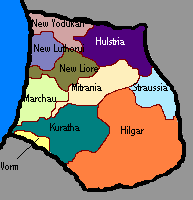
The nation is divided into five Crownlands headed, each with its own legislature and set of laws, but most power rests with the Imperial Diet in Kien. The Imperial Diet is the national legislature of the Imperial Crownlands and consists of over 725 representatives from across the country.
[edit] Political Parties
Current Political Parties
| Name | Party Leader | Political Spectrum | Position | Number of Seats in Diet |
| Christliche Liberalen Allianz | Cornelius Adlersflügel | Liberal | Federalist/Royalist | 122 |
| Fascist Authority Party | Frederick von Labsburg | Conservative | Royalist | 163 |
| Kaiserliche Hulsterreichische Partei | Gereon von Thannhausenand | Conservative | Royalist | 110 |
| Verfassungsunabhängigkeit-Partei | Alexander Van Spyer | Liberal | Nationalist | 122 |
| Liberal-Demokratische Partei | Fredrich Reding | Centrist | Roylist | 114 |
| Christliche Zentrumspartei Hulsterreichs | Egon Ritterlich | Centrist (leaning Liberal) | Royalist/Christian Democratic | 94 |
[edit] Administrative Divisions
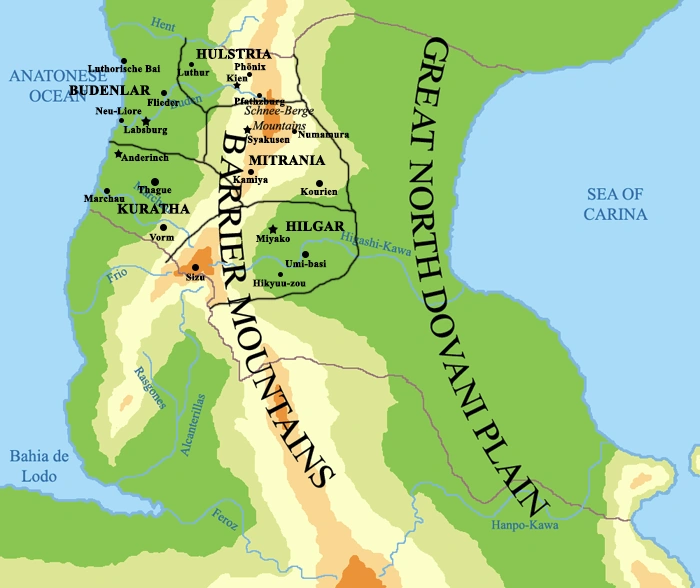
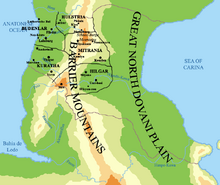
Greater Hulstria is a Constitutional Monarchy divided into five Crownlands and the Eastern Territories, with the five crownlands divided into 67 districts known as Kreise in Hulstrian. The five Crownlands are Budenlar, Hulstria, Mitrania, Hilgar and Kuratha; each pocess their own elected government and unique culture. The Crownlands are governed by elected Landtags who make up their legislatures and Chief Ministers who head the regional government and supervised by Crown Commissioners appointed by the Monarch. The Eastern Territories, divided into Districts or Regierungsbezirks in Hulstria, are lead by Chief Administrators appointed by the Imperial Comissioner and are governed by Representative Assemblies; the Imperial Comissioner of the Eastern Territories is the head of the administrative of the territories and is nominated by the Governor-General and the Staatsminister of Hulstria, and must be confirmed by the Imperial Diet. Such governance of the Eastern Territories is determined by the Colonial Affairs Act.
| Crownland | Flag | Area | Population | Capital |
|---|---|---|---|---|
| Budenlar | 143,100 km | 103,950,317 | Labsburg | |
| Hilgar | 229,500 km² | 106,610,694 | Rothingren | |
| Hulstria | 111,000 km² | 86,154,418 | Kien | |
| Kuratha | 162,300 km² | 73,629,750 | Anderinch | |
| Mitrania | 209,700 km² | 88,561,848 | Graaffsberg |
[edit] Culture
Greater Hulstria does not have a single, defining national culture like most nations do. Instead Greater Hulstria has two different cultures that fall around ethnic lines and a third hybird culture. Hulstrians and the Gao-Showa have two very different cultures. However they do have some common ground such as reverence for authority and history and a strong belief in family bonds and values. Ironically the hybird version of these two cultures, termed by scholars "Gishoton Culture", has very little to do with the common ground the cultures share, but instead taking certain ideas and practices from each and mashing them together. This is largely because most of the people in Greater Hulstria who have adopted Gishoton Culture are members of the extreme left politically, and view the common groud that Hulstrian and Gao Showa Cultures share as too conservative if not reactionary for them. Hulstrian culture however is by far the most dominant of the three with more than 80% of the population claiming to be Hulstrian.
[edit] Religion
Stats on Religion of all nationals:
- 78% Christian
- 63% Lutheran
- 19% Episcopalian
- 10% Catholic
- 2% Mormon
- 6% Other
- 15% Taoic
- 96% Shinto
- 4% Buddhist
- 6% Atheist/Agnostic
- 1% Other
By Greater Hulstrian law the the official religion is Lutheranism, however the Hulstrian population is free to worship as they wish and hold membership in whatever religion they like.
[edit] Geography and Climate
As a country in the far north of Terra, Hulstria is quite a cool country and during the long Winter temperatures are generally below freezing causing impressive snow storms. During the summer however the climate is pleasant with the south of the country often becoming quite warm due to the ocean currents bringing warm water up from the equator.
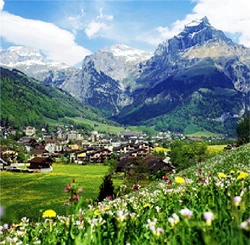
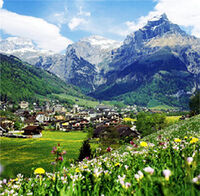
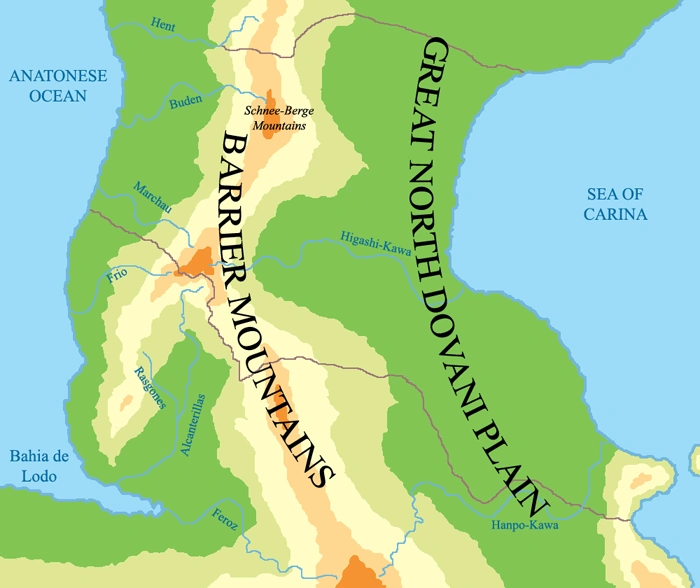
The coastal Crownlands of Budenlar and Kuratha are quite flat with the land slowly rising from the coast into the rolling hills of the interior. Further inland the Crownlands of Hulstria and Mitrania are dominated by picturesque snow-capped mountains. Most cities are in the foothills to the west of the crownlands with the east being dominated by the Schnee-Berge Mountains, too steep in many cases to build on or farm. Much of the Crownland of Hilgar lies on the other side of the barrier mountains and it flattens out into the Great North Dovani Plain, which makes up the bulk of the Eastern Territories and the north of Carina.
[edit] Economy
The Imperial Crownlands of Greater Hulstria is a heavily industrialised state with much of the population living in major conurbations. Following independence after the Great Rebellion, industrialisation was rapid with the economy switching from a mainly subsistence agricultural society to one based on the production of metals from the nation's abundant ores in the mountains. Hulstria also has a huge steel and aluminium industry and also produces some copper and gold.
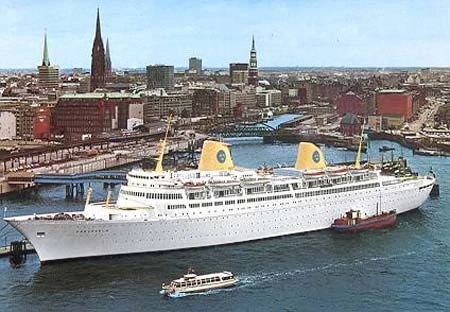
Hulstria is one of the world leading producer of ocean going vessels in the world. With her historic origins as a colony, ships were vital to getting back to Luthor, and the Hulstrians became experts in this field. When the age of steel ships dawned, Hulstria led the way using her vast iron and coal deposits as well as rapid industrialization to produce high quality capital ships. Today Hulstria continues her dominance of the shipping industry, with several of the worlds largest drydocks, shipyards, and ports in Hulstria.
The abundance of metals allowed the nation to build up an impressive automobile industry and is also a big producer of many forms of transportation with major shipyards on the coast and companies producing passenger and military aircraft. Most companies in Hulstria are part of massive conglomerations of industrial and financial interests, which are generally under the control of the major aristocratic families. Despite this apparent dominance of privately controlled companies the country is home to the two major exchanges of Dovani, The Kien Stock Exchange (KSE) and the Marchau Mercantile Exchange (MME), which mainly trade in commodities.
In modern times Greater Hulstria has emerged as the commanding economic force on the continent of Dovani with the Hulstrian Royal Crown, the currency of Hulstria, as one of the most valued on Dovani and has one of the highest GDPs on the continent as well; Hulstria has seen consisent GDP growth with today the Gross Domestic Product just shy of 9 trillion crowns. The Imperial Crownlands since 2551 has maintained a conservative economy however most consider the economy Hulstria to be mixed with current law combining both free and command market princples.
[edit] Demographics
The population of Hulstria is largely divided into two groups. The Caucasian Hulstrians are the descendants of Luthori and other Artanian colonists to the nation, are largely Christian, and live mostly in the North and West of the country. The Asiatic Gao-Showa are considered the native population, although they also colonised the nation, roughly one millennium before the Hulstrians. They are mostly followers of the Shinto or Buddhist religions and live in the East and South. The division between these groups and the rival claims to ownership of the country has led often to rivalry and war between the two. There are other ethnic groups present in the nation, notably the Welsh, but also Kazulians, Dranians, Sekowons and Indralans. Most immigrant populations are quickly subsumed into one of the main ethnic groups.
According to the latest census data some 70% of the population define themselves as Hulstrians, 5% as Kazulian, 1% as Welsh/White Dovani Native, 20% as Gao-Showa, and 4% as other.
[edit] Landmarks Of Hulstria
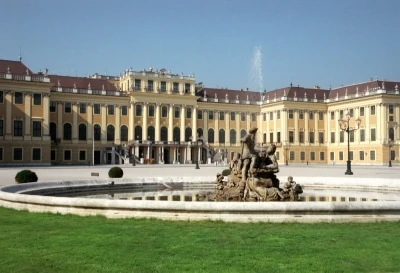
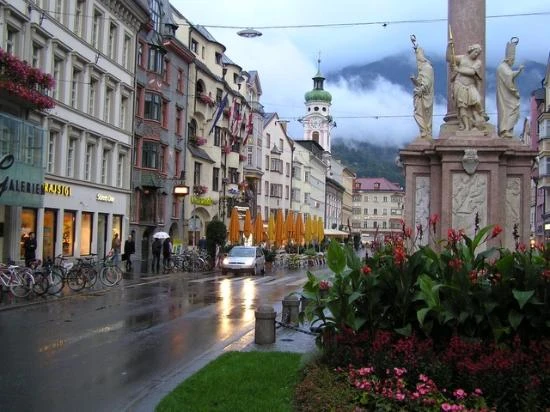
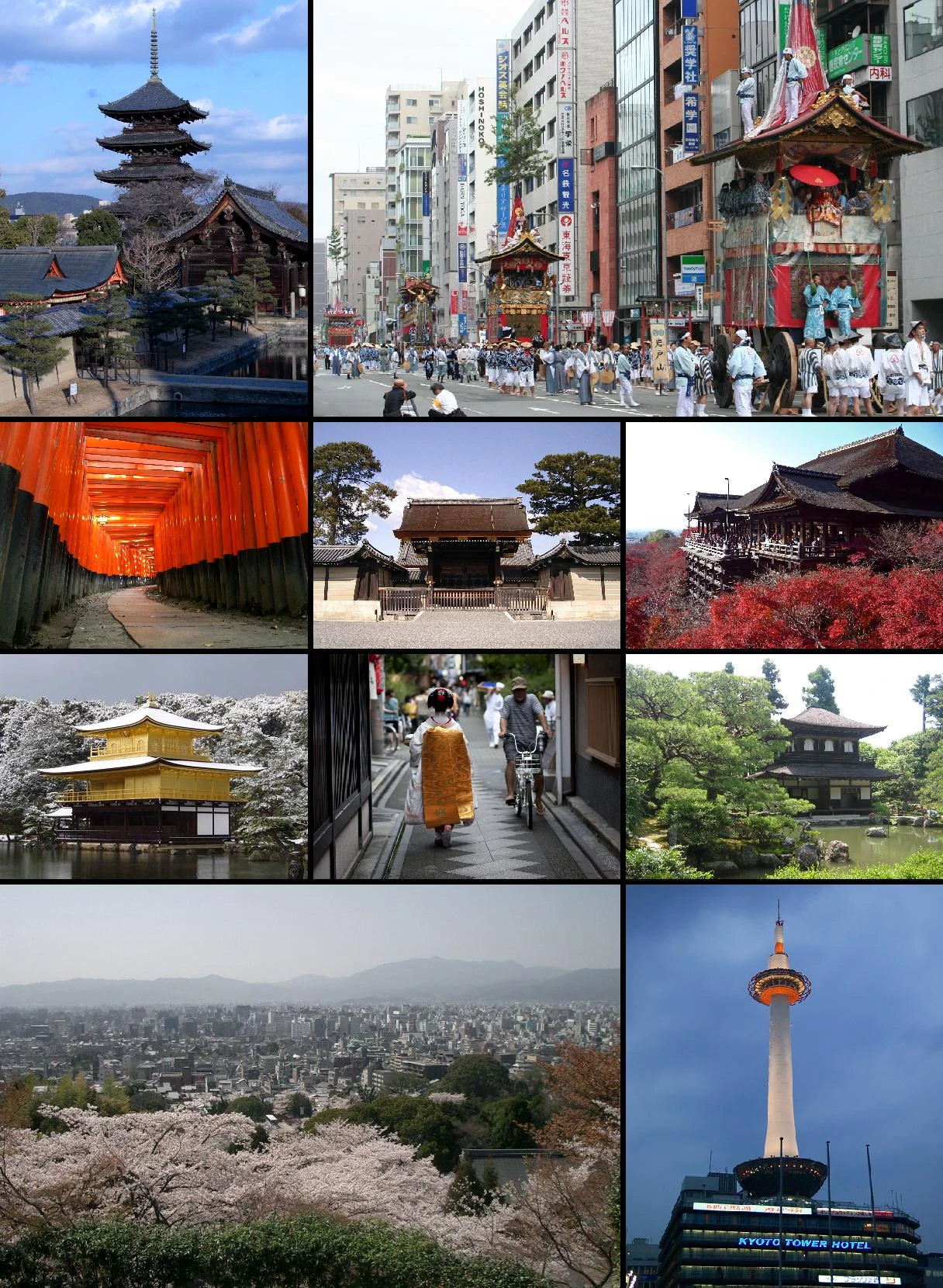
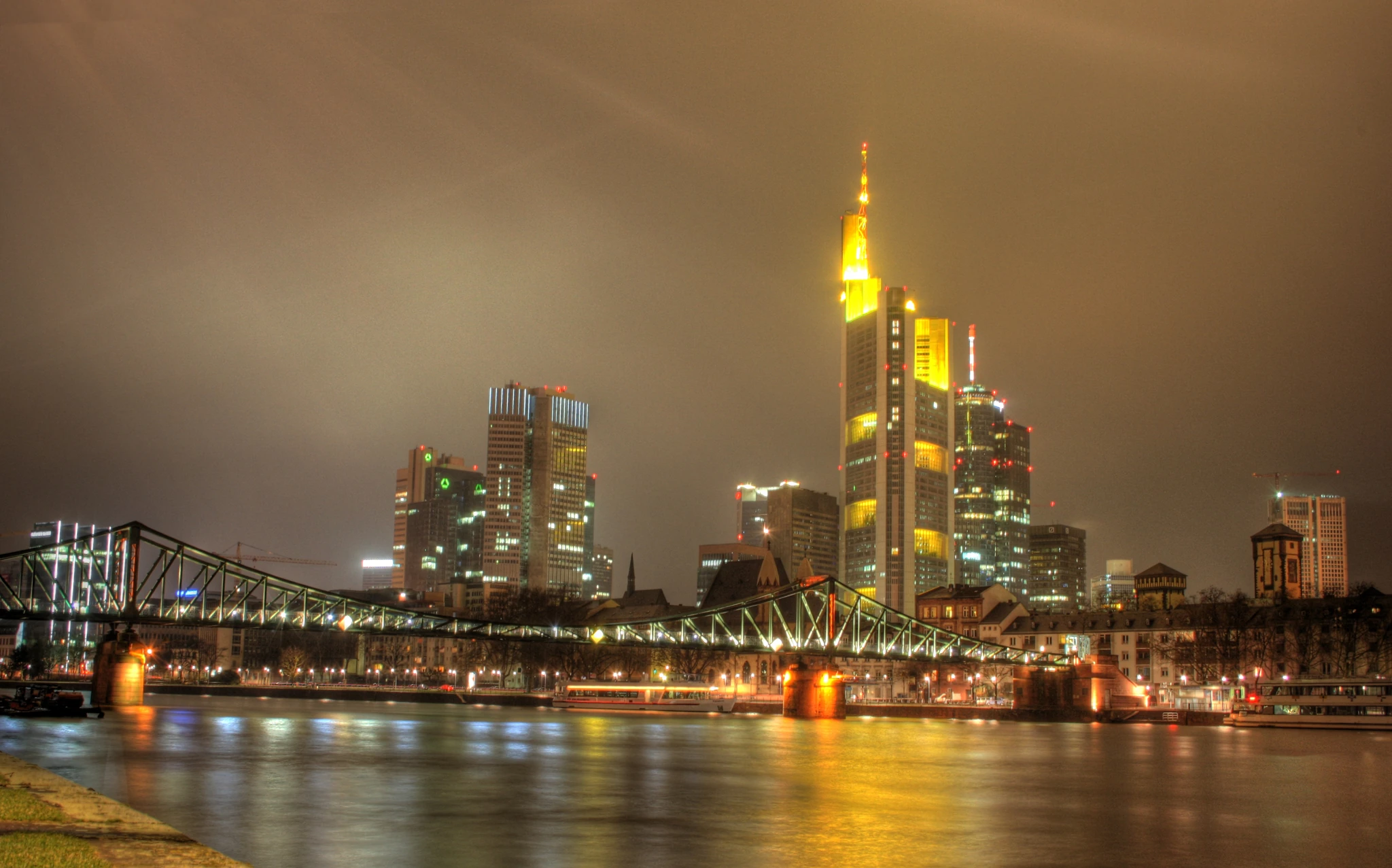
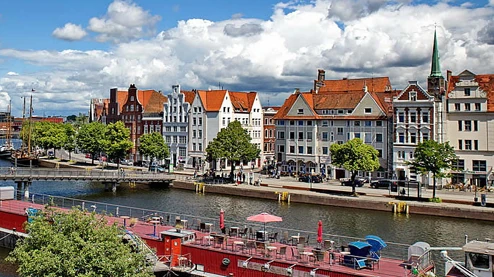
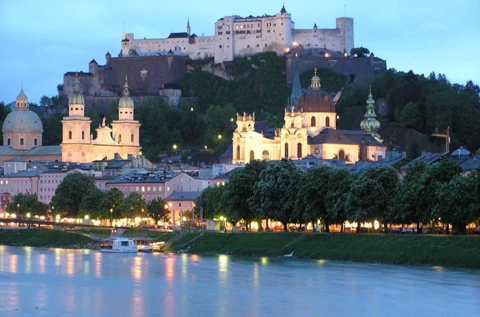
Hulstria is a nation legendary for its many landmarks. Because of its history and its infusion of both Hulstrian and Gao-Showa cultures, many unique structures dot its landscape. Equally impressive is the landscape itself. Hulstria stretches from the beautiful beachs of Luthorische Bai and Marchau to the rolling hills of Rothingren and Graaffsberg and all the way up into the scenic mountains surrounding Kien. Hulstria is, of course, most known for its Imperial history and castles and palaces, like Fliederbrunn Palace, are popular for tourists to visit, while others like, Phönixstein Castle, are famed landmarks even though they are not open to the public.
| Nations of Dovani |
|---|
|
|